Compression: Mark Berry

“Compression is how I feed one 595-word story into my 97,000-word publisher-seeking memoir— at a level that the vignette can stand on its own.” — Mark Berry
Compression: Cynthia Litz

“[Some of my] compressed narratives occur while their characters are moving through Time. In the stories, either Time has been expanded, or the reader’s exposure time to a moment has been expanded. Various forms of imprints are left, including what’s missing in the narrative.” — Cynthia Litz
Compression: Camille Alexa
 “I came to writing compressed literature in a backward fashion—or perhaps it’s the natural order: novels, then short fiction, then poems. Turns out my aim is the same regardless of size or form; I want to tell a story, and want that story to mean something, preferably something accessible and entertaining at the same time, not weighted or bloated with its own importance. Freeing my writing from the tether of the probable liberates its themes—loneliness, love, death—and sets it free to shoot like a meteor across the stratosphere or like a bullet into the gut.” — Camille Alexa
Compression: Katey Schultz

“The use of compression varies from piece to piece, at times by a stilling of the moment or an expansion of time; other times by visually zooming in or zooming out on a repeated image. Compression is also used by implication—wherein we see characters for only a few brief moments—but entire histories are implied in their actions over the course of just one or two pages.” — Katey Schultz
Compression: Albert Sgambati

“In my engagement with the language I’m partial to the exploration of short sharp lines and lightning strikes. The pressures of tightly wound words yield an anxious and sudden fiction as strange and magical as the world around us.” — Albert Sgambati
Compression: Donna Vitucci
“When I think of compressed arts, or compression, I invariably think of the cold compresses my mom would set across our foreheads when we had fevers, or during the dead of summer when we tried to sleep, as children, my sisters and i, in the still and sticky-hot nights. Thus is the remedy for agitation and fidget, for the too-much-ness that heat carries. Each of my short shorts has had a cold compress put to it, and therefore what remains delivers ease and relaxation and a more alert consciousness. Or maybe that’s all blather. maybe compression just means get to the point, plunge in the point and get out quick.” — Donna Vitucci
Compression: Susan Lewis
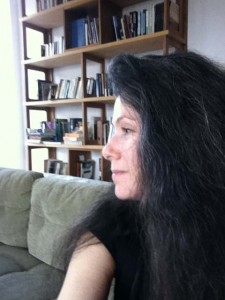
“As for compression—single paragraph prose poems (many of which can easily be considered flash fictions) make up a significant portion of my work. For me, compression is of supreme importance because of its challenge—amounting to: put up or shut up. Compressed literature is also inherently respectful of the intellect and imagination of the reader, whose active participation in the white space surrounding the piece—all that is suggested but not delineated—is essential to its success.” — Susan Lewis
Compression: Paul Weidknecht
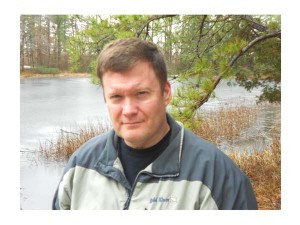
“I believe the component of compression in my short fiction is expressed by combining a base of mimimal information—a setting and a character in conflict—with a vocation or emotional state, allowing the reader to explore some aspect of life with which they might not have been familiar. Regarding compressed fiction, I feel it is necessary for the writer to present precise words in order to let the reader fill in the rest of the story.” — Paul Weidknecht
Compression: Mark Simpson
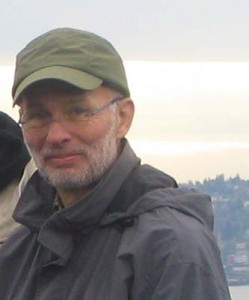
“Compression is paradox: Less equals more. How? In this poem, by using a negative strategy—saying less but implying more than what’s said. Image and scheme carry the weight—a central image supported by anaphora and isocolon. A gamble of trope and rhetoric.” — Mark Simpson
Compression: Michael Gause

“Compression plays a large part in my prose, as I have always enjoyed the narrative tension built by the higher frequency of action in shorter work. I love the intricate southern arabesques of Flannery O’Connor as well as the bittersweet urban landscapes of Raymond Carver.” — Michael Gause

Matter Press is now offering private flash fiction workshops and critiques of flash fiction collections here.
Upcoming:
03/23 • Kenneth Pobo
03/30 • Roberta Allen
04/06 • Avril Shakira Villar
04/13 • TBD
04/20 • TBD
04/27 • TBD
05/04 • TBD
05/11 • TBD
05/18 • TBD
05/25 • TBD
06/01 • TBD
06/08 • TBD
06/15 • TBD
06/22 • TBD
06/29 • TBD
07/06 • TBD
07/13 • TBD
07/20 • TBD
07/27 • TBD
08/03 • TBD
08/10 • TBD
08/17 • TBD
08/24 • TBD
08/31 • TBD
09/07 • TBD
09/14 • TBD
09/21 • TBD